
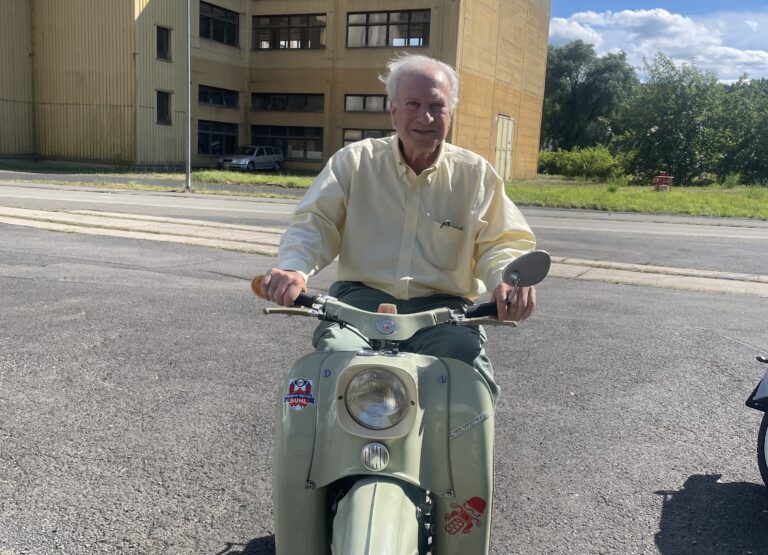
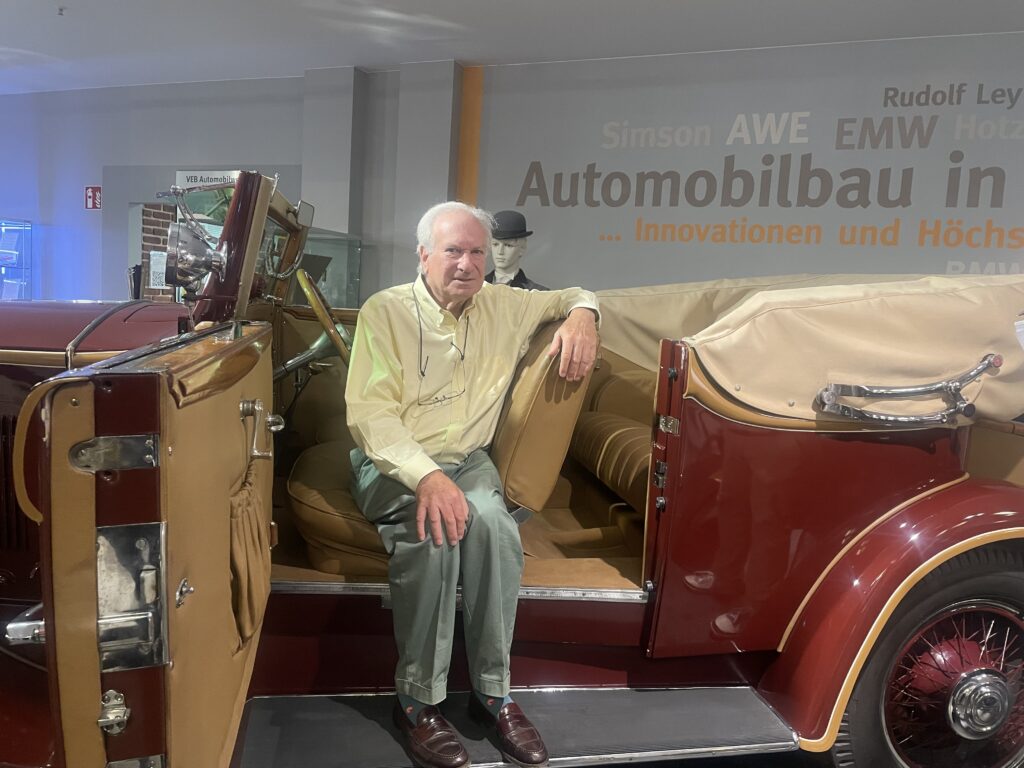
Dennis Baum’s (81) fight for his family’s heritage goes back to 1990, when the unification of the GDR and BRD raised the question of restitution.
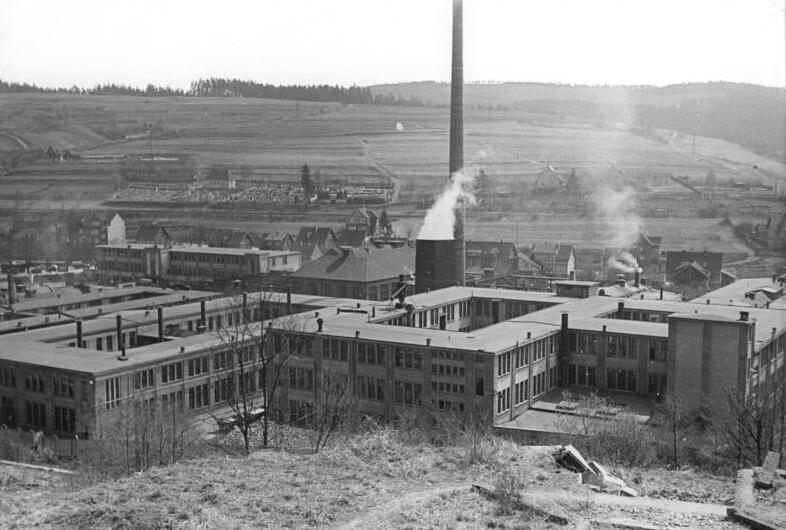
Today, Simson is mostly known for its moped model called Schwalbe. Its lasting popularity stems largely from the fact that it was one of the only models of its kind available. It stands as a symbol of the western-style freedom that people from the former socialist regime could enjoy. Outside the former GDR, Simson is less well known, and in the US it’s barely known at all. With the rise of the Nazis, the family’s business was taken from them, and the family fled to the US. But the changing and quite complex story went on. It was only in 1990 that the family found out they still held remaining rights to the company, in a sense. David Brown wrote about the issue in detail in an article published in 2014.
But the story still isn’t finished. During one of its campaigns, the right-wing extremist party AfD co-opted the already popular image of the »East German on a moped«, infusing it with nationalist overtones, and sent its own party members on tours to promote their election campaign. We talked to Dennis Baum, heir and spokesperson for the family’s heritage.
When did you find out first about the Ostalgia meetings and the use of your name in the context of the new fascist party?
The history actually goes back quite a bit further. I just have to go back. Let’s say about 12 years ago when I was in Berlin and we were doing a reunion with the Treuhand-people at the time to discuss the strategies that had been undertaken in the 1990s. And at the end of that discussion there were some interested people in the audience who asked questions and one of the last questions that I got was from a young man who stood up and said: »Mr Baum, did you know that there are many many Simson Schwalbe clubs throughout East Germany?« and I said »No«. I had absolutely no idea and he said: »Yes we gather together on weekends and take trips through the countryside and it’s quite prevalent throughout the East of Germany.«
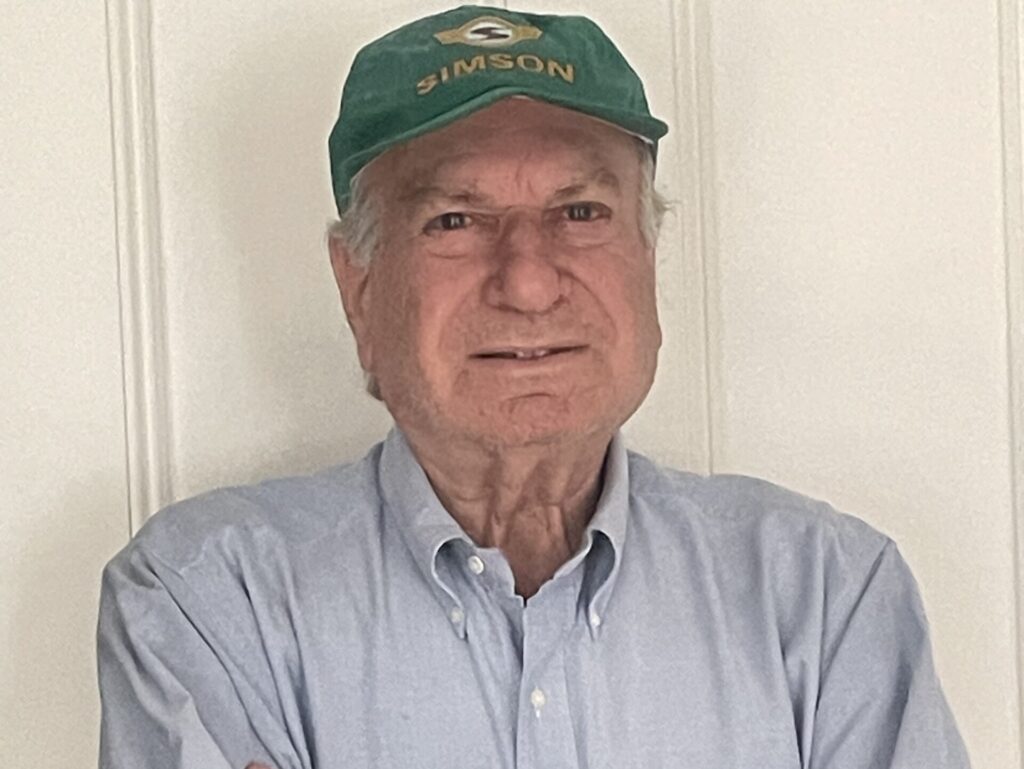
And then the young man came up to the stage and he gave me a Simson hat. It was a very nice gesture. That’s how I first learned that the Simson moped the Schwalbe and the other models had all become somewhat in focus.
What happened then?
So now fast forward to an interview that I had with the Süddeutsche Zeitung in early 2026. They called me to find out about this very strange nostalgia that had developed around the Simson moped, and they asked me what my opinion was. I hadn’t heard about this incredible nostalgia that had developed – other than the clubs. And I tried to be a little bit cautious about what I was saying, and I told the reporter I was very pleased with the engineering, that it had lasted so many years and that the bikes were still so popular. And of course it’s a wonderful thing that it carries the Simson name. It’s very nice publicity for the family, and I thought that was the end of the story.
But it wasn’t…
It was not the end of the story, because in January I received an email from friends in Europe showing me pictures of an AfD campaign — shirts and posters which very clearly said »AfD« and »Simson« on them.
How did you and your family react to that? It must have been a shock…
It was. When I alerted my family, they were absolutely outraged that AfD could use our name for political purposes, particularly since we considered the AfD to be antisemitic and anti a lot of other things that the family did not approve of. So we met as a group of five different Simson members and decided we were going to mount a campaign in Germany to make it very, very clear that we vehemently disapproved of any use of our name in the AfD campaign. So that’s the story of how it grew from a club to a mission on our family’s part.
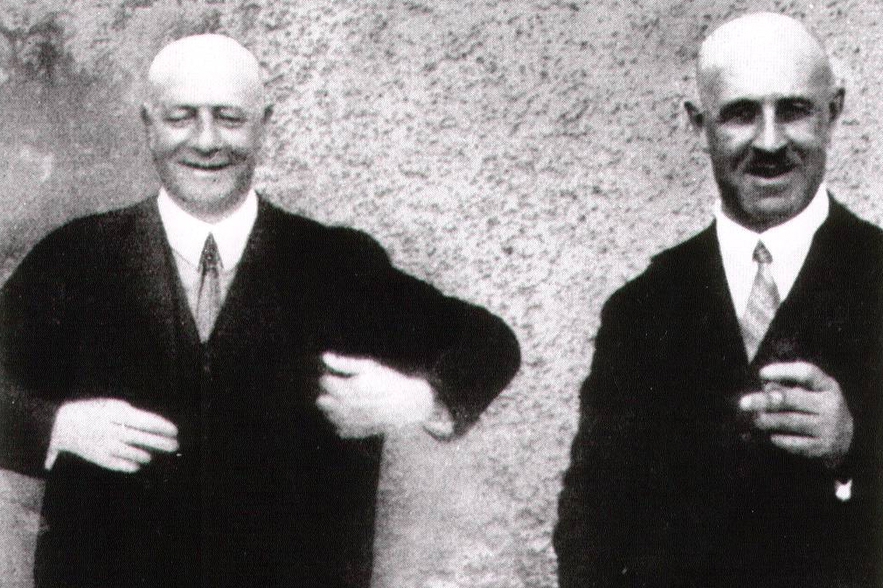
Julius and Arthur Simson © Stadtverwaltung Suhl.
Looking back, did you notice any of that kind of nostalgia in your first encounter with the moped clubs?
We were not aware of that until January of 2026, when I saw the email. And it was quite clear at that time that this was incompatible — massively incompatible. First of all, being a Jewish family, and secondly, all the other problems that were created by people such as particularly Höcke and his eastern friends.
Do you think they knew about the history of the company that goes far beyond the GDR and the Schwalbe?
There was a lot of publicity out in the general public about the Simson family being a Jewish family, and there was a lot of criticism, but I think the criticism didn’t really rise to a higher level until the family got involved.
What happened then?
We had a number of opportunities to meet with people in the East. We had a particularly important opportunity to speak at the Festival der Demokratie in Erfurt on July 4th, in which I expressed my opinion without any hesitation, and hopefully the message got across.
Have you ever been in direct contact with the AfD or the people who organize the meetings?
It wouldn’t make any sense, but they did respond — and they responded in a very aggressive, insulting way, and some of the rationale coming out of individuals was just completely nuts. It made no sense!
Do you have any legal options to prevent them from using the name, or is there any basis?
Well, the actual control of it lies with the German government, because of the settlement that we made with the Treuhand in 1993. And the agency that is running that is called GESA, and they actually did what they were supposed to do — they were supposed to protect the brand, and they did!
What did they do?
I didn’t know that originally, but they actually went in and blocked the AfD from using the Simson name in their political advertisements, and forced the destruction of all those t-shirts and stickers. So I was kind of surprised, but I was happy to know that they had done a good job in protecting the brand.
Wow! What a nice surprise!
Yes, indeed.
Still, the situation is a pretty complex one...
Yes. So, the Simson moped itself didn’t belong to us. The company and the name Simson got carried along and suddenly rose to a level that shouldn’t have happened. We kind of like the idea of the Schwalbe clubs. We like the idea of gathering together and going out into the countryside. It’s a way to develop camaraderie. That’s not bad — that’s good. The Simson moped itself is still this fascinating, nostalgic object, and you saw the various politicians from the AfD — they usually arrive in big black cars; now they arrive on Simson mopeds instead. They are trying to put across a message that they are representative. But the use of the Simson name in a blatant political context cannot happen. And by the way, I want the Simson name completely out of all politics. It’s not just AfD politics — there’s no reason for Simson to be named in politics at all. I hope we will get to that point.
And are there any German allies supporting you in this matter?
We have a number of people who are deeply allied to the family. Ulrike Schulz wrote the book about the Simson-Werke, and we have a political advisor who’s been advising us since February, and our former business partner who was involved deeply for 35 years with the family in settling the claims that we had with the Treuhand.
You mentioned the play Freiheit: Simson.
The Simson play is going to take place on October 2nd, and I’m going to be back in Suhl for the play, bringing some members of my family, including my grandchildren. And we are going to do the traditional tour of Suhl to explain the family background.
Can you tell me more about the play?
It’s going to be factual, with a mixture of fiction as well. And I’m going there with family that doesn’t speak German — my German is okay, but it’s not great. I have a feeling I’m going to need a little interpretation after the play. I really look forward to it; it’s a very special event. Actually, the reporter for the Süddeutsche Zeitung is deeply involved, and I met the director as well — a very creative, flamboyant person. I’m really looking forward to it.
If there’s a positive aspect in this matter, you as a family got back into deeper research about your family’s heritage and become closer, too — is that right?
Yes, it really was an event that brought the family together — dramatically together. We all signed on to the program. We all decided it didn’t make any difference what it cost; we were going to go ahead, hire the right people, and get the message across. And I think we were quite effective in getting the message across. Whether it had any impact on voters, I can’t possibly tell you, but we had to get our message across.
If you want to know more about the family’s story, listen to our Exil Podcast episode 22!
Text: Lutz Vössing